

Introduction
The keto diet centers around the fat. And in a diet plan in which up to 75% of the calories come from fat — which shifts your body to ketosis, or a state where you burn fat for your primary energy source (rather than carbohydrates) — this is going to be the nutrient you’re most concentrating on. Some choices however are safer than others.
Most individuals consider that they just have to consume a lot of fat and eliminate carbohydrates, but on the keto diet one can easily consume an excessive amount of unhealthy fat
What is fat
For years, fat has been denigrated. The old concept that high-fat diets were associated with very high levels of blood cholesterol, type 2 diabetes, high blood pressure and increased risk of heart disease had the public scrambling for low-fat foods.
Yet new information has emerged over the past several years about the important role fat plays in a healthy diet. Healthy fat foods can have a positive impact on your overall health, as science has learnt. It all depends on what kinds of fats you embed in your regular meal plan.
Dietary fat is naturally occurring in plants and animals alike. Although its principal role is to provide energy for your body, it plays a variety of other key roles, such as:
Enables to absorb fat-soluble vitamins A, D, E and K1
Adjusts inflammation and immunity
Keeps in good condition cell wellbeing, including skin and hair cells
Adds richness to food that helps you feel full and satisfied
Types of fat
There are some categories of fats on keto that should account for the majority of your calories.
Saturated fats, monounsaturated fats (MUFAs), and some polyunsaturated fats (PUFAs) are healthy sources of fat to eat on keto.
The best way to approach your ketogenic diet when creating your low-carbon, high-fat meal plan is to adhere to foods that contain the fats mentioned above.
Now what is obvious, though both are considered keto-friendly, is that sources of unsaturated fat are still preferred over saturated fats. These unsaturated fats proved to be anti-inflammatory and cardiac healthy.
Unsaturated fats: MUFAs and PUFAs
The unsaturated fats are liquid at room temperature and split into two classifications: monounsaturated fatty acids (MUFAs) and polyunsaturated fatty acids (PUFAs). Monounsaturated fatty acids comprise one double bond, making them liquid at room temperature, whilst polyunsaturated fats comprise several double bonds in their chemical structure.
Monounsaturated fats have been shown to improve insulin sensitivity, decrease cardiac risk and even lower blood pressure.
A little more caution should be taken on polyunsaturated fats. Some PUFAs are vital to brain health, such as Omega-3 fatty acids, and should be part of any healthy diet. Furthermore, if PUFAs such as vegetable oil are heated or oxidized, they may form dangerous substances such as free radicals, which have been shown to increase body inflammation[*]. The above suggests you should never use PUFAs to cook, and these fats should always be eaten cold and should never be eaten if rancid at all.
Saturated fats are solid at room temperature and typically come from animals These fats come from foods like steak, bacon, chicken, eggs and others.
There used to be a common belief that saturated fats cause high cholesterol, blocked arteries, poor heart health and a host of other health issues.
Recent research have also discredited this argument, showing no considerable connection between saturated fats and heart disease risk
In addition, there are many benefits to having healthy saturated fats included in your diet. Saturated fat can optimize cholesterol levels in HDL and LDL, maintain bone density, decrease inflammation and promote the formation of important hormones
Trans fats that are naturally occurring such as grass-fed animal food and grass-fed dairy products such as butter, greek yogurt, cheddar cheese are completely fine for consumption.
Unhealthy Fats
Partially hydrogenated oils and hydrogenated oils, also regarded as trans fats, were developed as a means of making unsaturated fats stable at room temperature and solid.
Studies show that processed trans fats can be associated with metabolic diseases such as obesity and type 2 diabetes, inflammation, cancer and cardiac disease
Vegetable oils comprise large amounts of omega-6 fatty acids, which may have negative health effects, like inflammation [ * ], if not combined with adequate omega-3s. These are also quickly oxidised, which can cause dangerous free radicals to be released.
What is cholesterol?
Cholesterol is a waxy substance that is present in animals only. It does not provide energy, unlike the fatty acids. Nevertheless, your body requires it to generate steroid hormones, vitamin D, and bile acids that help digest fat. All of the cells make cholesterol; in fact, almost all of the cholesterol in your blood comes from your body instead of the food you eat. Dietary cholesterol usually doesn’t raise blood cholesterol levels much, if any, and thus probably doesn’t increase the risk of heart disease.
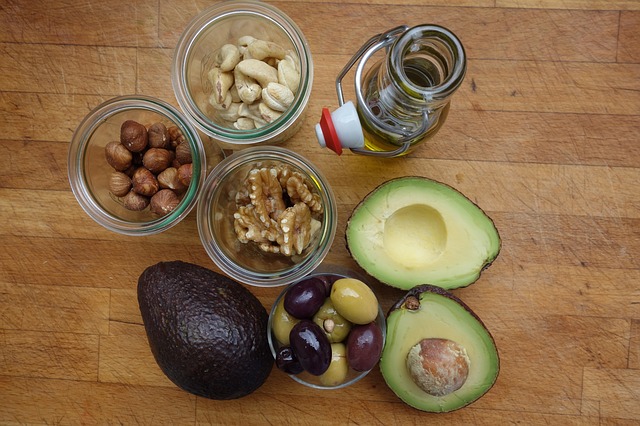
Healthy unsaturated fat sources
Olives and olive oil
Avocados and avocado oil
Macadamias and macadamia oil
Almonds, Brazil nuts, hazelnuts, pecans
Lard and tallow
Fatty fish
Chia seeds
Healthy polyunsaturated fat sources
Fatty fish (salmon, tuna, mackerel, trout, herring, sardines, anchovies)
Meat from grass-fed animals
Dairy from grass-fed animals
Eggs from pastured chickens
Algae
Chia seeds
Flaxseeds, flaxseeds oil
Hemp seeds
Sunflower seeds
Nuts
Extra virgin olive oil
Avocado and avocado oil
Healthy saturated fat sources
Eggs
Coconut oil or MCTs (medium chain triglycerides)
Grass-fed butter
Fatty cuts of red meat like NY strip steak, porterhouse, and t-bone
Lard
Palm oil
Butter and ghee (clarified butter)
Cream, whipping cream and coconut cream
Cheese
Fats to avoid
Corn oil, Canola oil, Grapeseed oil, Peanut oil, Rapeseed oil, Safflower oil, Soybean oil, Sunflower oil,
Margarine,
Vegetable shortening
Cookies, crackers
Fast food
How much fat to eat
Most people don’t need to count calories or grams of fat on a low-carb or keto diet. Whilst also keeping carbs low and protein within a fairly wide moderate range, many individuals may eat as much fat as they require after a meal to feel satisfied. This often allows body weight to remain within the desired range, or to approach it.
Keto diets are, generally, higher in fat than low-carb diets. Usually a keto diet contains about 70-80 percent of calories as fat.
The fat quantity consumed explicitly depends on individuals calorie needs and goals, but excessive consumption of fat can result in weight gain. Also, considering that fat is the main source of fuel for your body on a keto diet, it is recommended spreading your fats evenly throughout the day.
There are many options for getting healthy fat foods into your diet. Incorporate some pieces of avocado as a side to your main course or drizzle over your keto veggies with extra virgin olive oil.
Takeaway message
If you commit to the natural fat sources mentioned above, you will begin to feel the benefits of ketosis without the potentially negative implications of the unhealthy fats.
Healthy fat foods are really an essential part of a healthy diet and on your ketogenic journey they can be of great help. Selecting good fats such as saturated fat, MUFAs, and PUFAs when deciding which foods to eat are important to assuring you get the correct type fuel for your body.
Look for high-quality, non-processed saturated fats from animal sources and unsaturated fats with an extra focus on healthy omega-3 sources. Stay away processed trans fats, oils of low quality, or heated polyunsaturated oils.
Related topics:
References:
en.wikipedia.org
mport.com
Disclaimer: Please note that this site contains affiliate links to products. We may receive a commission for purchases made through these links. We may receive commissions when you click our links and make purchases. However, this does not impact our reviews and comparisons. We try our best to keep things fair and balanced, in order to help you make the best choice for you.
 Best life hacks to improve yourself
Leave a comment